Research

Five connected threads. Each one is a different attack on the same problem: closing the gap between what a cheap sensor physically measures and what a person actually needs to decide. Three of them start from computation, two from the device.

01

AI agents for biosensing

A measurement is not a decision. A lateral-flow strip, a paper microfluidic chip, or a wearable produces a number, and somebody still has to work out what it means and what to do next. I build grounded language-model systems that close that gap: they read raw sensor output directly, check it against a version-controlled knowledge base rather than against whatever the model happens to remember, and return retest, refer, or report.

The hard part is refusal. A system that guesses when the strip is smudged or the lighting is wrong is worse than no system at all, so quality control and human-in-the-loop oversight run across the whole path rather than sitting at the end of it. The target is the setting where there is no trained operator and no second opinion available.
Large language modelsAgentic systemsGrounded interpretationEquitable diagnostics

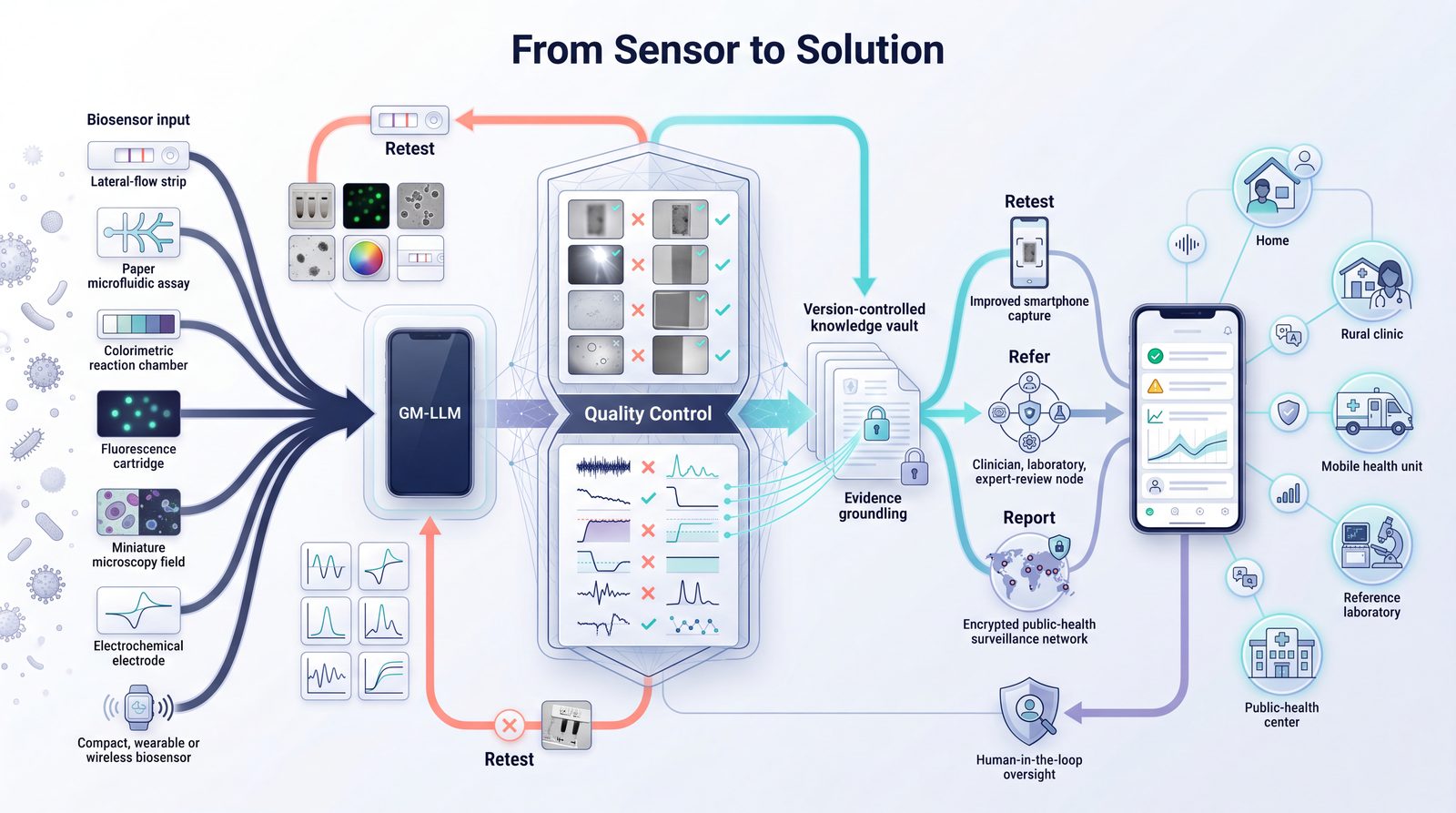
From Sensor to Solution: biosensor inputs pass through a grounded multimodal LLM and a quality-control stage, then route to retest, refer, or report.
From Sensor to Solution. A grounded multimodal model takes raw output from lateral-flow strips, paper microfluidics, colorimetric chambers, fluorescence cartridges, microscopy, electrochemical electrodes, and wearables, runs quality control against a version-controlled knowledge vault, and returns retest, refer, or report rather than a raw number. Human-in-the-loop oversight sits across the whole path.
02

AI-guided sensor discovery

Colorimetric sensing is cheap, portable, and almost entirely built by trial and error. Someone picks a dye, runs the reaction, and finds out. I am replacing that with prediction. HueBase AI predicts how an analyte and a dye will interact before anyone makes anything, which turns sensor design from a screening problem into a search problem.

An agent reads the colorimetric-sensing literature, including the tables and the sensor-array images rather than just the text, and builds one feature space across dyes, analytes, and solvents. A tree-based engine then scores that space and narrows a library of thousands of dyes to a handful worth synthesizing. The shortlist gets made and tested on paper arrays, so the loop closes rather than ending at a prediction.

CheminformaticsMachine learningColorimetric sensingDesign of experiments

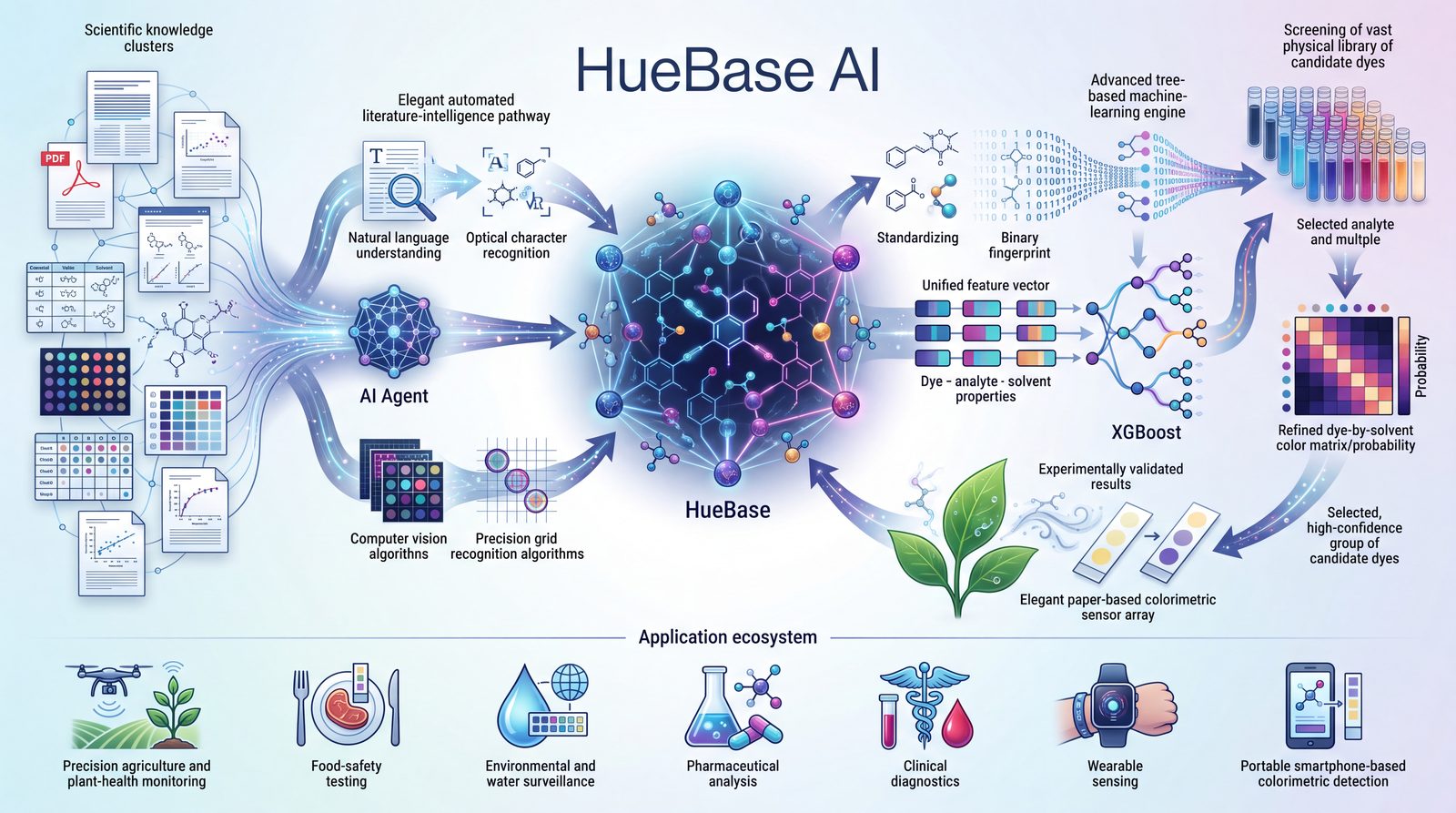
HueBase AI pipeline: literature intelligence, a unified dye-analyte-solvent feature space, an XGBoost engine, and a dye-by-solvent probability matrix.
HueBase AI. An agent reads the colorimetric-sensing literature, including text, tables, and sensor-array images, and builds a unified dye, analyte, and solvent feature space. A tree-based engine then returns a dye-by-solvent probability matrix that narrows a vast dye library to a handful of candidates worth making. The shortlist is validated on paper-based sensor arrays.
03

AI for materials discovery

Materials have the same problem. Gallium-based liquid metals are stretchable, self-healing, and biocompatible, which makes them unusually good candidates for soft biosensors, but their optical behavior at the nanoscale was poorly mapped and the usual way to find out is to make particles and look.

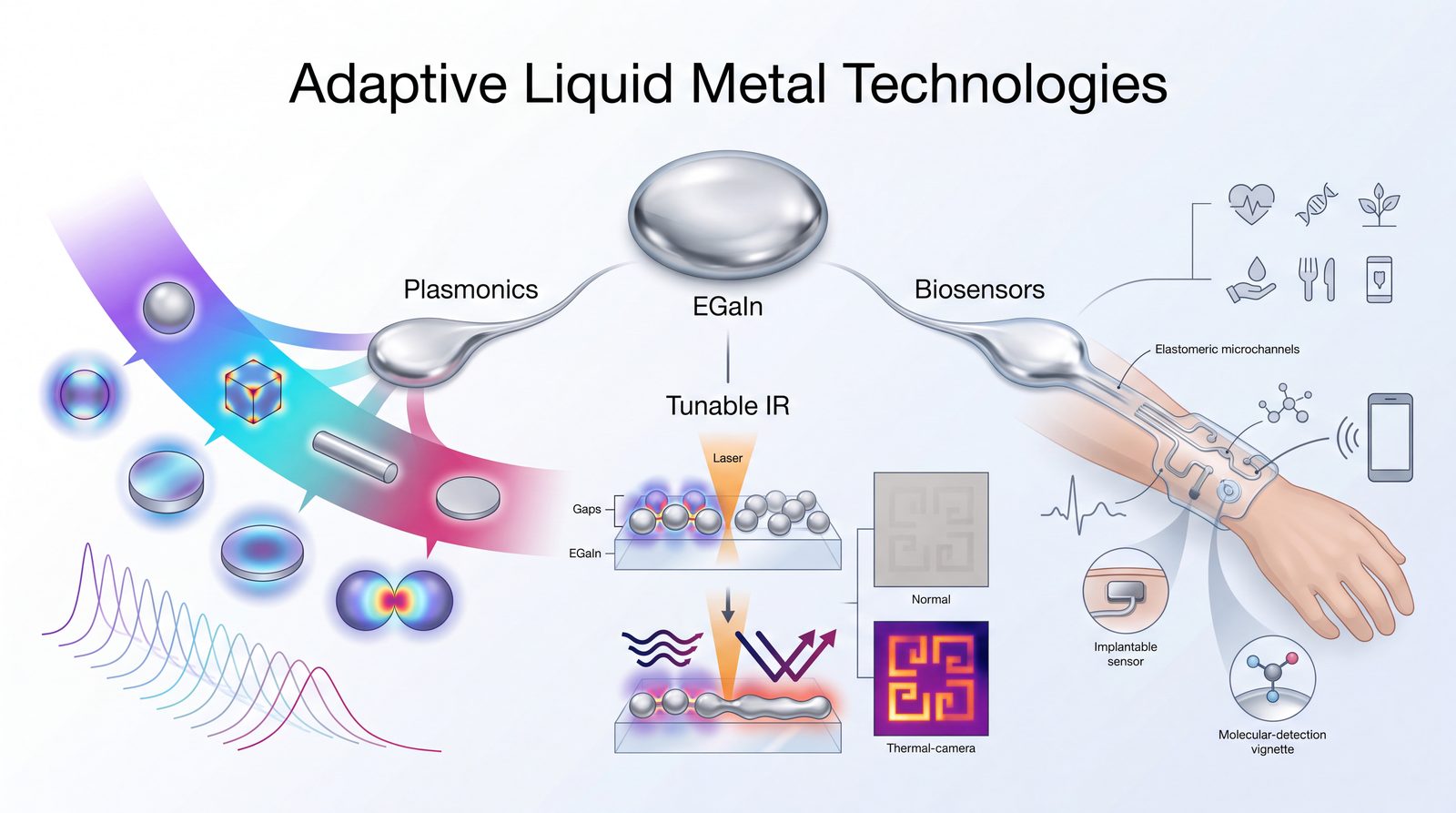
I computed it instead: how the plasmonic resonance of EGaIn nanoparticles shifts with shape and size, across the space rather than at a few points. The output is a design map, not a single device, so somebody who needs a particular resonance can read off the geometry that produces it. That map feeds directly back into the wearable and plasmonic assay work, and the same particles turn out to tune infrared emissivity when laser-sintered.

Computational electromagneticsPlasmonicsEGaIn nanoparticlesSoft materials

Adaptive liquid metal technologies: EGaIn branching into plasmonics, laser-tunable infrared emissivity, and soft biosensors.
One material, three directions. EGaIn nanoparticles give shape and size-dependent plasmonic resonances, which is the design map I computed. Laser sintering the same particles closes the gaps between them and tunes infrared emissivity, visible as a pattern that appears only to a thermal camera. And because the metal stays liquid, it can be routed through elastomeric microchannels into stretchable, implantable, and molecular-detection biosensors.
04

Wearable sensors for plant and human health

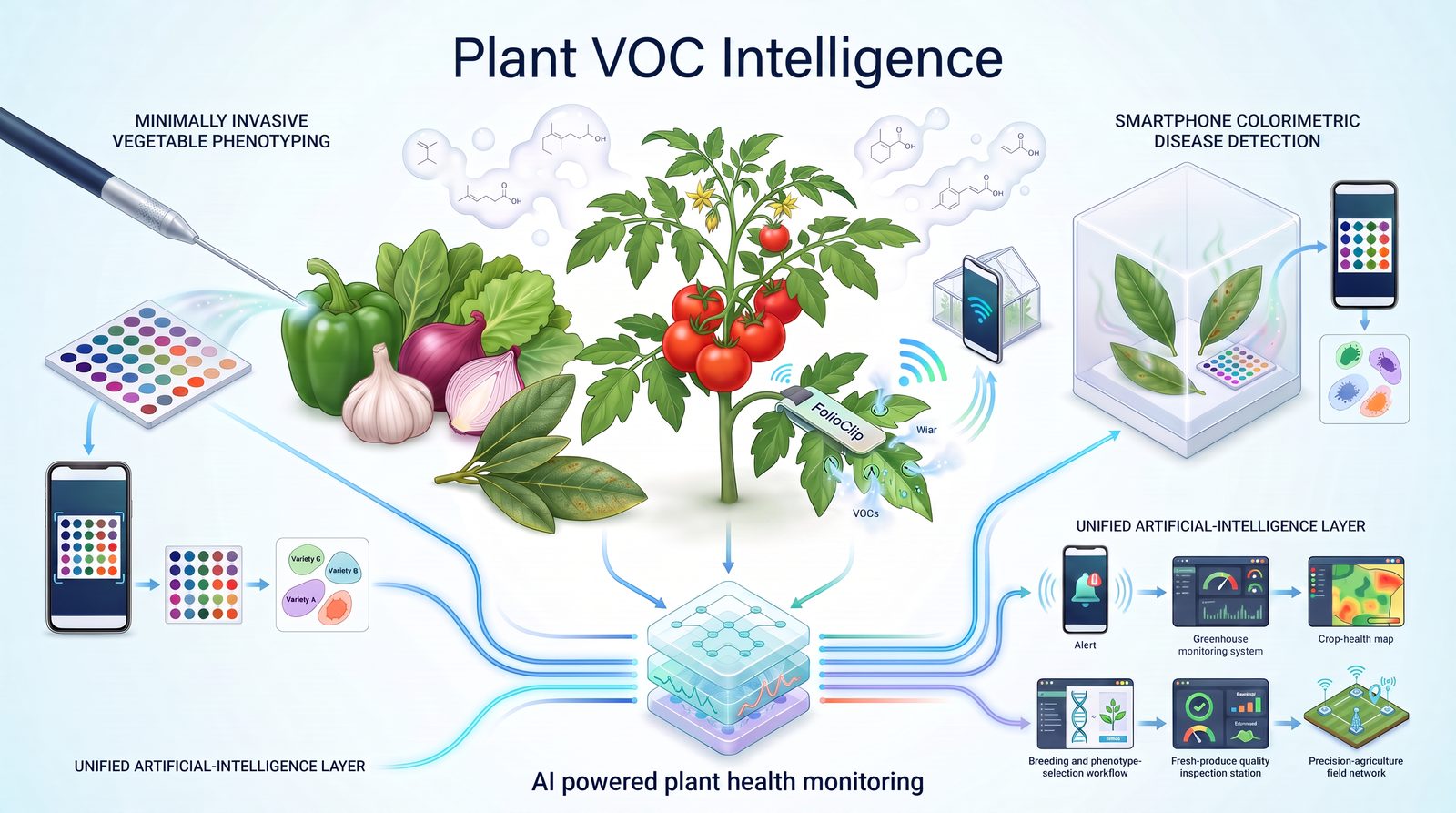
Plants signal stress long before a human eye or a satellite can see it. We developed a multimodal wearable that mounts on the abaxial leaf surface and monitors plant physiology continuously, then used sensor fusion and machine learning to read those signals. The patch detected tomato spotted wilt virus four days after infection, well ahead of visible symptoms. That platform has since extended to volatile organic compound sensing for early disease detection, organ-specific plant sensing systems, and transparent skin-and-leaf patches that work across both plant and human physiology.

Flexible electronicsSensor fusionVOC sensingPrecision agriculture

Plant VOC Intelligence: needle-based vegetable phenotyping, a leaf-clip wearable, and smartphone colorimetric disease detection feeding a shared AI layer.
Plant VOC intelligence. Three ways of reading the same chemistry, all feeding one model layer: a needle probe for minimally invasive vegetable phenotyping, a leaf-clip wearable streaming volatiles from a living plant, and a smartphone-read colorimetric array for disease detection. The shared layer turns those signals into alerts, crop-health maps, breeding and phenotype selection, produce inspection, and field-scale monitoring.
05

CRISPR and smartphone molecular diagnostics

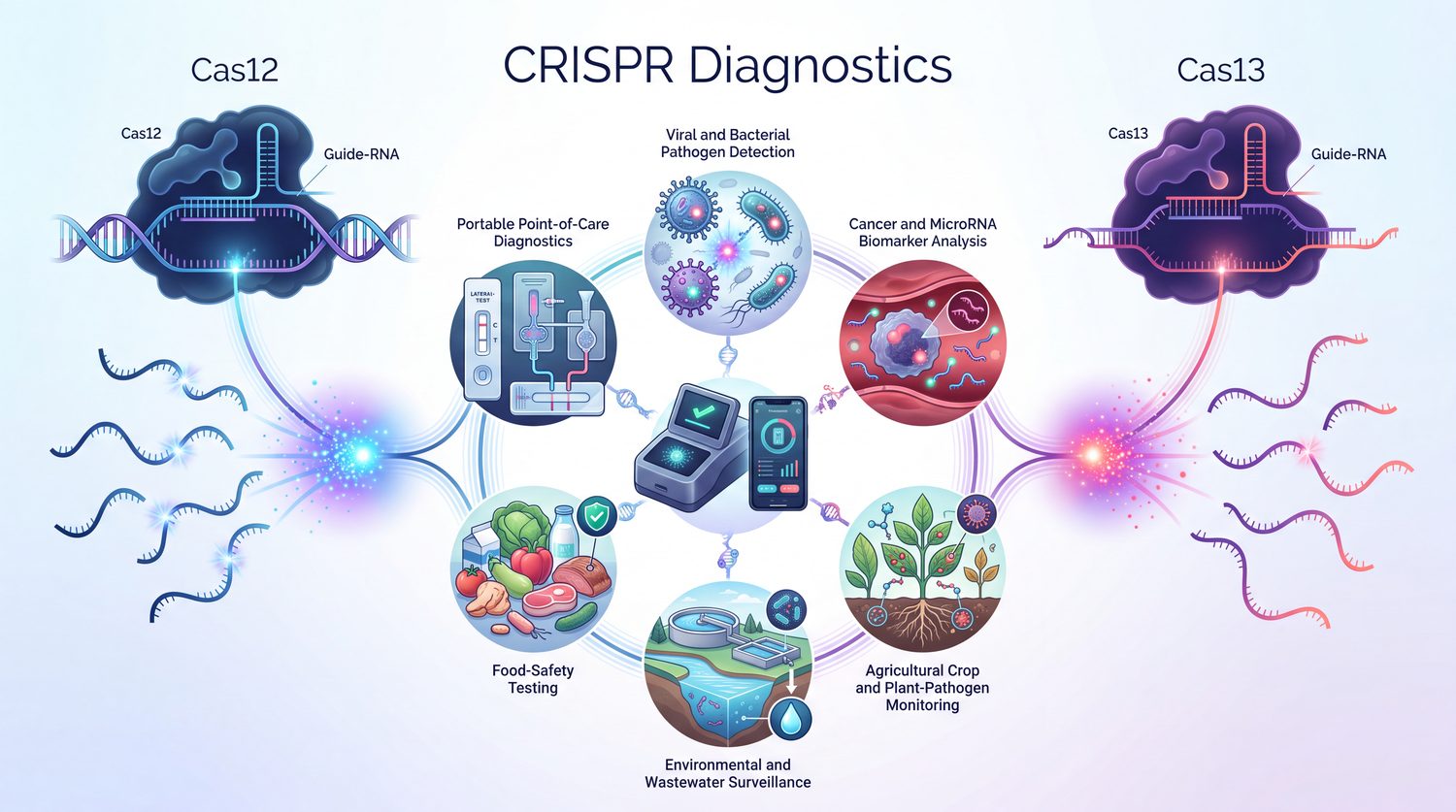
CRISPR-Cas systems make excellent nucleic acid detectors. Cas12 and Cas13 cut indiscriminately once they find their target, so a single binding event can be amplified into a signal you can see. The difficulty is that almost every published assay still assumes a thermocycler, a plate reader, and somebody trained to run them.

I work on the versions that survive without any of that: multiplexed Cas13 assays for RNA, and label-free amplification chemistry that reaches attomolar sensitivity for HIV-1 read on a phone camera. The same detection primitive carries into pathogen and food-safety screening, wastewater surveillance, crop monitoring, and cancer biomarkers, which is why the assay chemistry is worth getting right once rather than rebuilding per application.

CRISPR-Cas12/Cas13Point-of-careNucleic acid amplificationSmartphone imaging

CRISPR diagnostics: Cas12 and Cas13 collateral cleavage feeding point-of-care, pathogen, food-safety, environmental, agricultural, and biomarker applications.
CRISPR-Cas12 and Cas13 collateral cleavage as a detection primitive, and the application space it opens: point-of-care testing, pathogen and food-safety screening, wastewater surveillance, crop monitoring, and cancer biomarkers.

Methods I work across

Computational: Python, PyTorch, machine learning and deep learning, large language models, computational electromagnetics (COMSOL), molecular and process simulation (Aspen), MATLAB, high-performance and cloud computing.
Experimental: flexible and wearable sensor fabrication, colorimetric and volatile sensing, CRISPR-Cas assay development, nucleic acid amplification, protein expression and purification, mammalian and bacterial cell culture, confocal microscopy, nanoparticle synthesis and optical characterization.

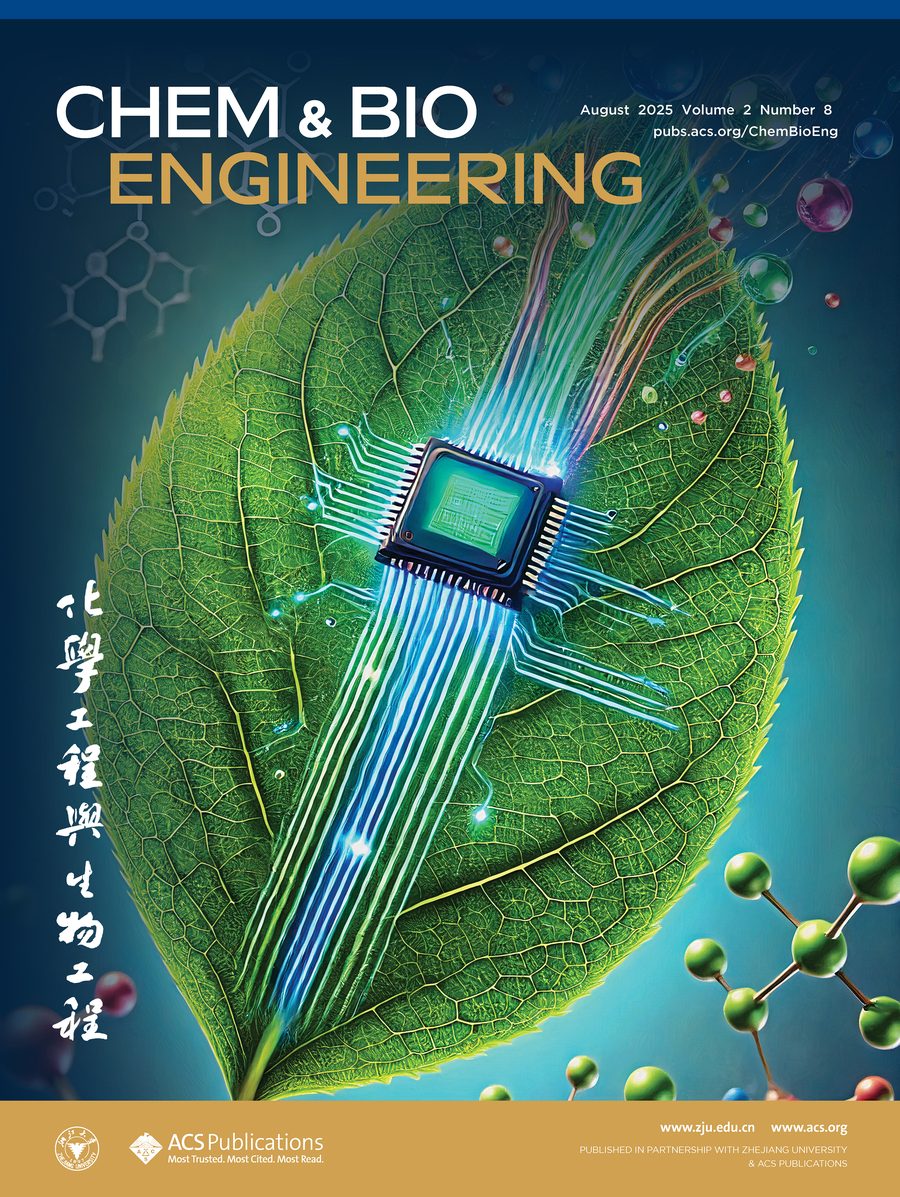
Cover art

Three of these papers were selected for the journal cover.

  • Chem & Bio Engineering cover: a leaf with an integrated sensor chip Chem. Bio. Eng. 2025, 2, 460–474. Wearable VOC sensors for sustainable agriculture.
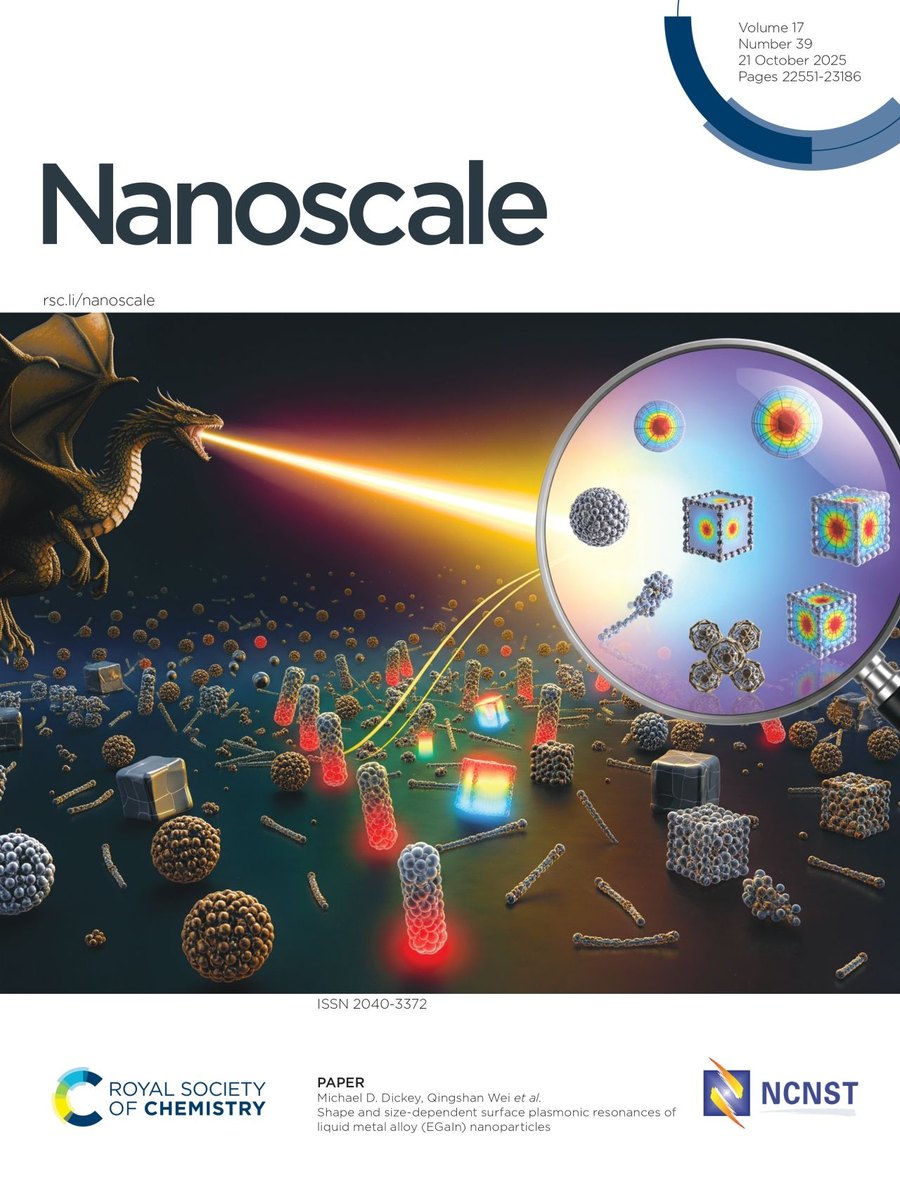
  • Nanoscale cover: liquid metal alloy nanoparticles Nanoscale 2025, 17, 22819–22833. Plasmonic resonances of liquid metal nanoparticles.
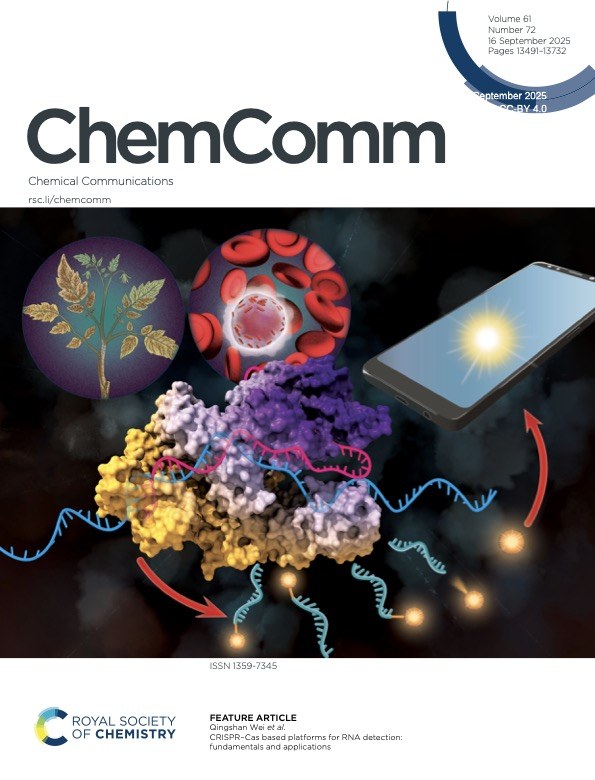
  • Chemical Communications cover: CRISPR-Cas RNA detection Chem. Commun. 2025, 61, 13571–13600. CRISPR-Cas platforms for RNA detection.